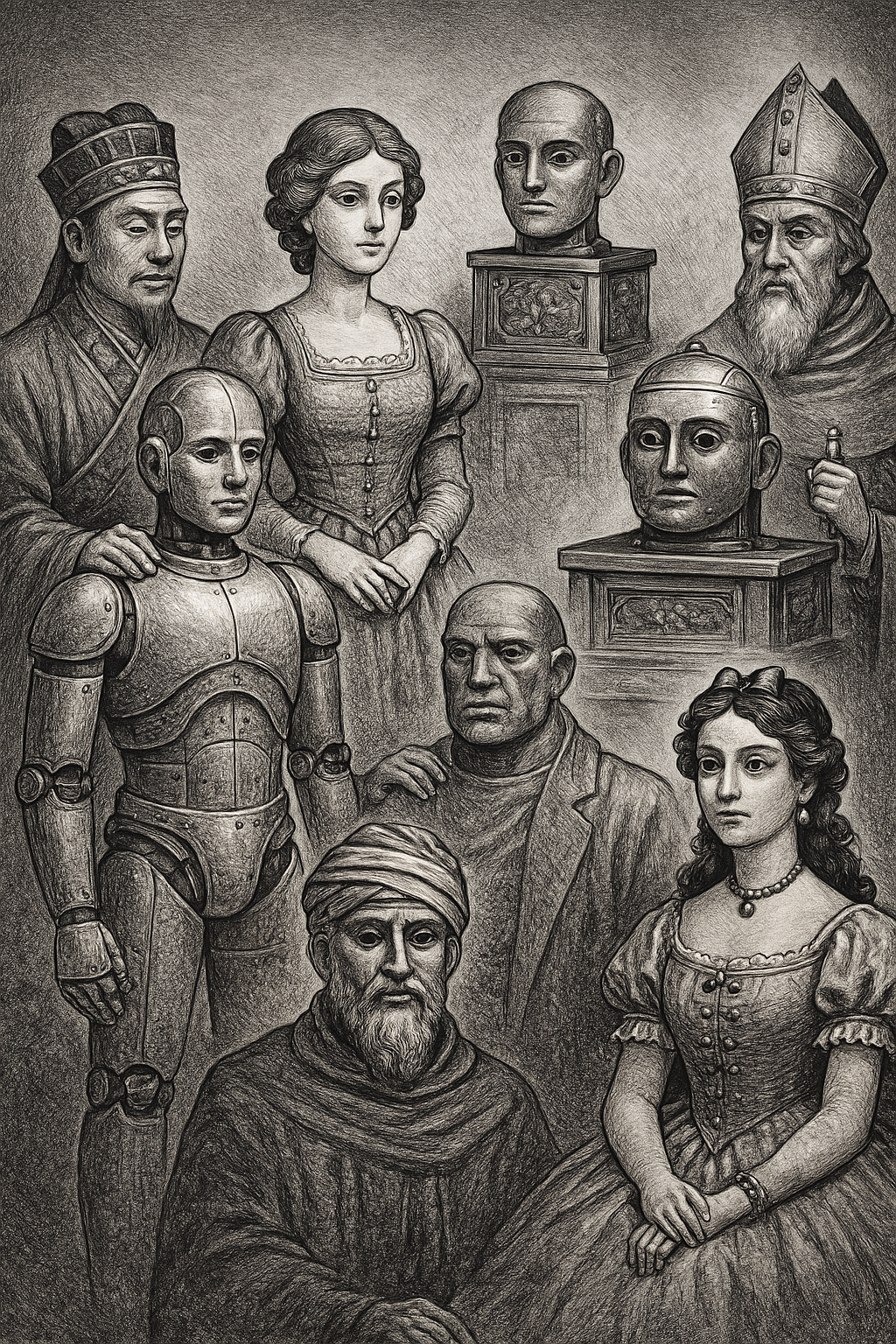
robots of the yellow emperor
Solomon's "servants of brass" / "djinn bound into metal forms"
Pygmalion
the mechanical maid
the talking head of Sylvester II (“Dicitur etiam fecisse caput aëneum quod responsa reddebat ad quaesita.”)
Kempelen's mechanical Turk
Golem
E.T.A Hoffman's Olympia
Frankenstein
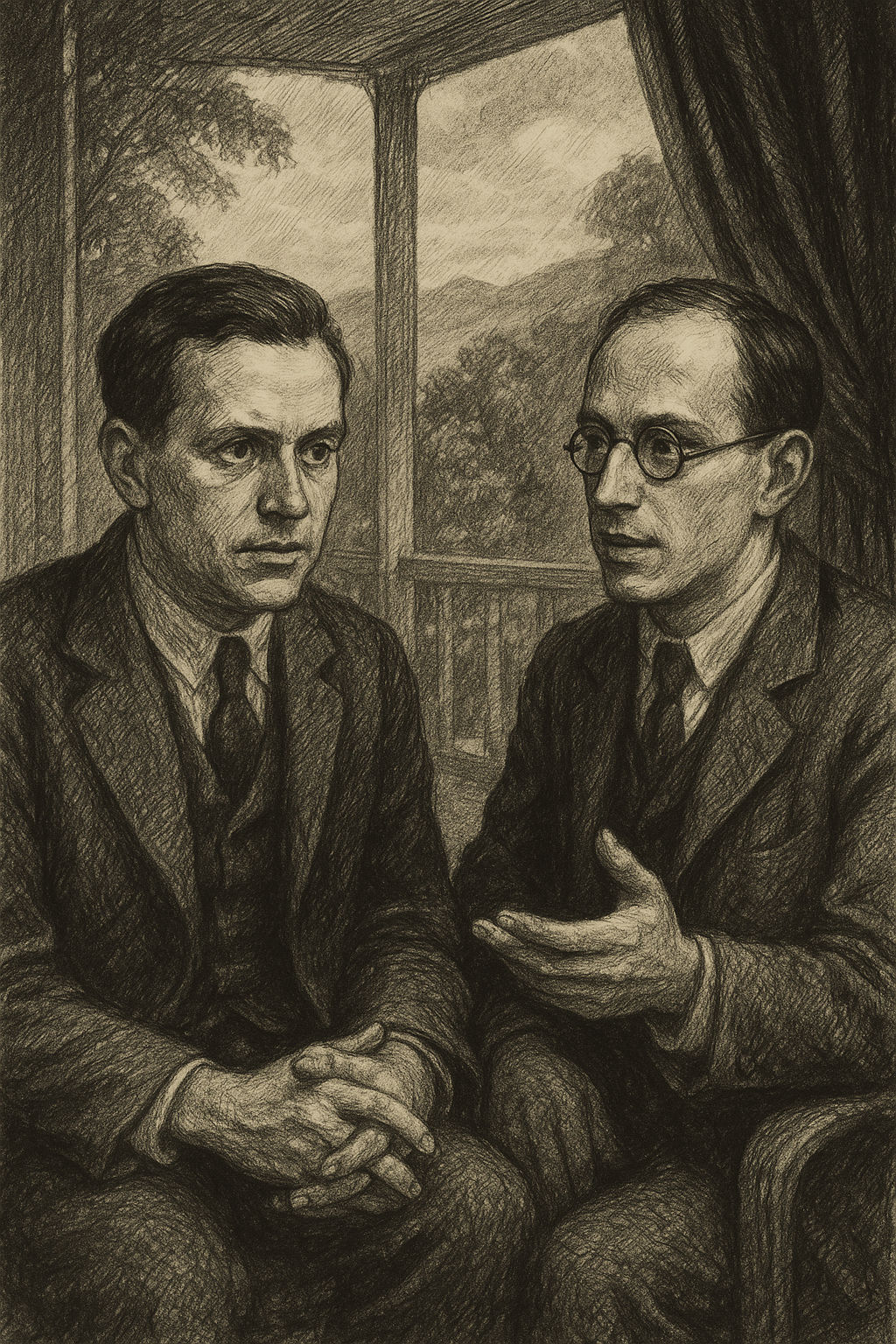
The Čapek siblings formed a uniquely interdisciplinary circle where painting, prose, and theatre shaped one another.
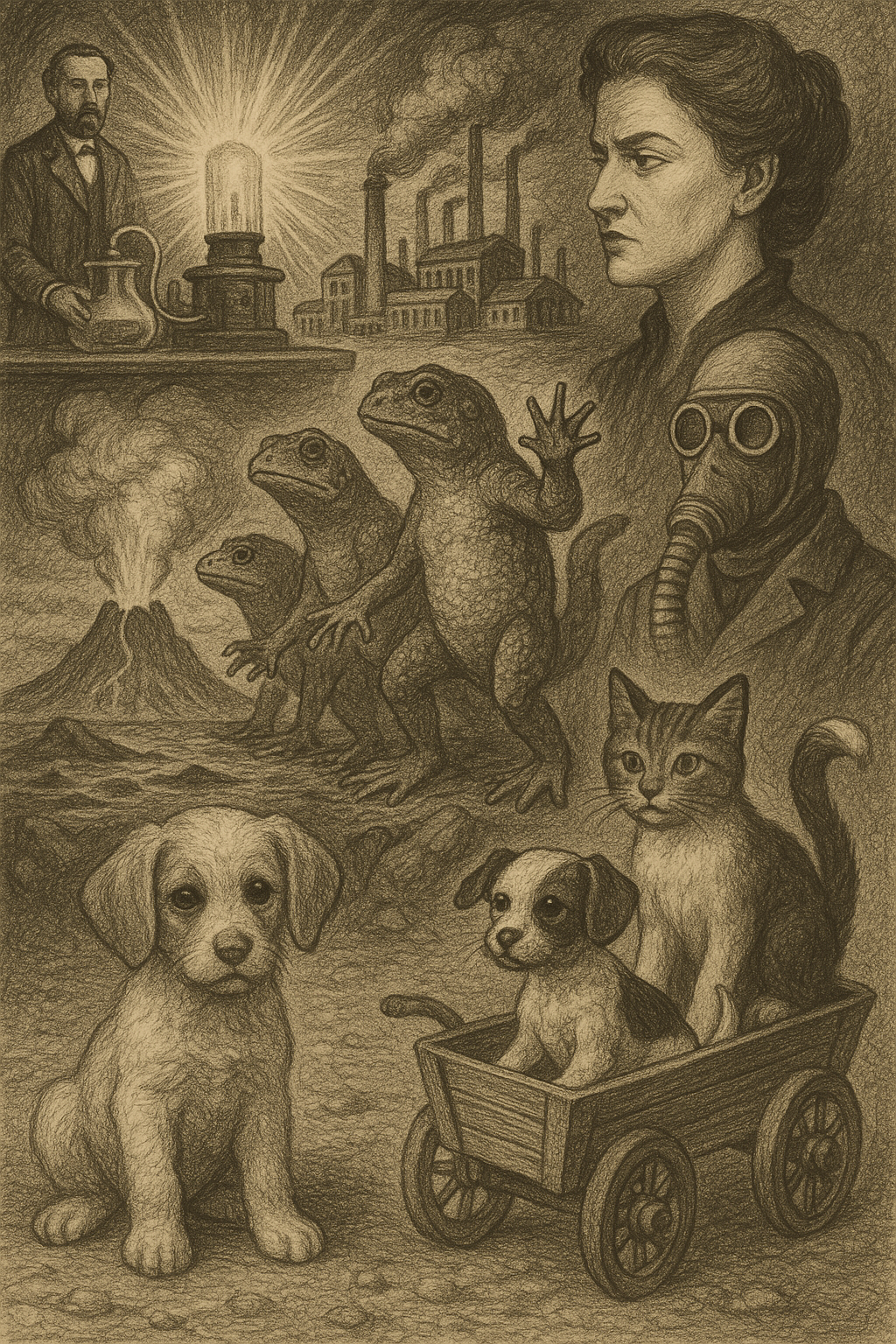
Karel (nominated 7 times for the Nobel prize) is author of such future-oriented works such as *The Absolute at Large*, *The Makropulos Affair*, *The War with Newts*, *The White Disease*, and *Krakatit*.
Josef’s visual minimalism offered a parallel modernism—expressive lines that echoed Karel’s speculative questioning.
Josef is also an author of cult pro-canine (& in lesser extent also pro-feline) books *Dashenka, consequently the life of a Puppy* and *The adventures of Puss and Pupp*
Helena preserved the family’s creative world in lyrical memoirs, adding a softer literary register to the Čapek constellation.
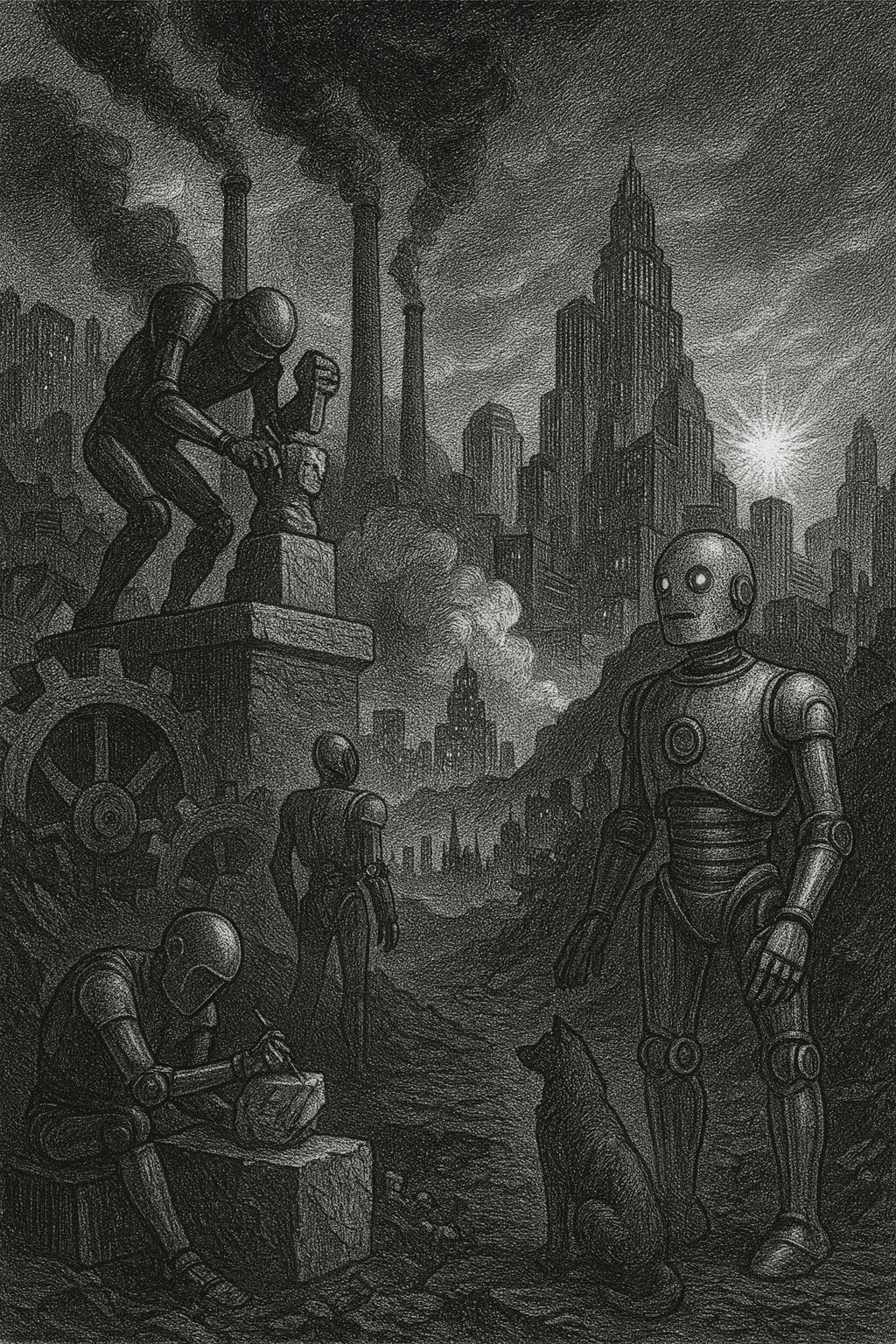
1920 play that introduced the word “robot” [from slavic robota ("forced labor") derived from PIE root *orbh- "to change allegiance, to pass from one status to another" (Latin orbus "bereft," Sanskrit arbhah "weak, child," Armenian orb "orphan," Old High German arabeit "work," Old English earfoð "hardship, suffering, trouble")]
Robots are bio-engineered workers, grown in vats— not metal machines.
Robots are treated as disposable labor, mirroring capitalist exploitation.
A global robot uprising emerges from suffering, injustice, and denied personhood.
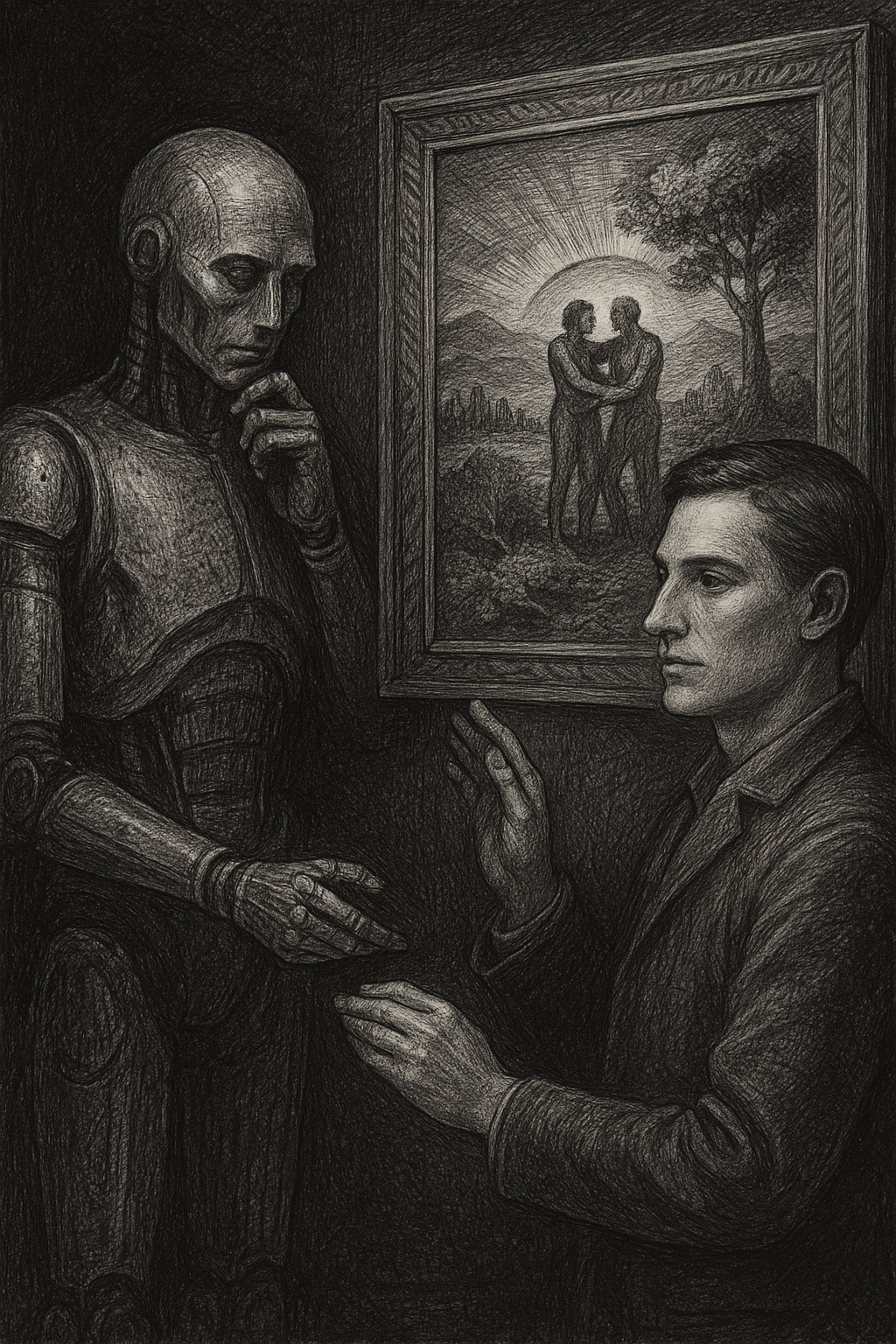
Two robots capable of love become a new Adam and Eve—Čapek’s post-human rebirth.
The Maschinenmensch is a unique android created by the scientist Rotwang, born from his obsession with resurrecting his lost love.
On Joh Fredersen’s orders, the robot is given the face of Maria, the workers’ spiritual leader.
As “False Maria,” she preaches violent rebellion to the workers, driving them to destroy the city’s machines.
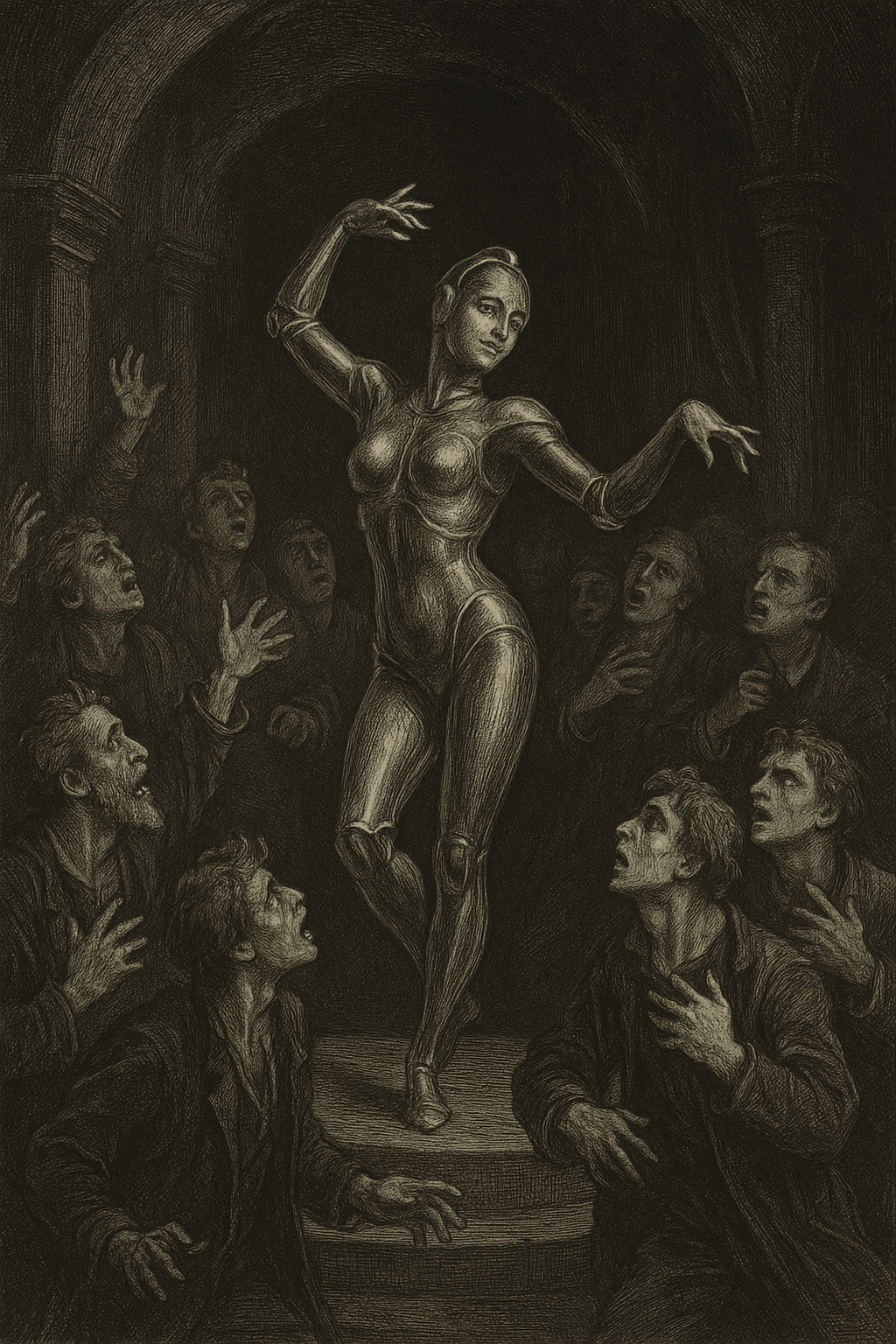
Among the elite, she incites lust and chaos with her nightclub dances, corrupting Metropolis’s ruling class.
The robot becomes an allegory of technology that imitates, replaces, and weaponizes human identity and sexuality.
When the workers discover the deception, they burn the False Maria; her human mask burns away, revealing the metal android beneath.
Her destruction clears the way for reconciliation between workers and rulers—the human order restored after the machine’s masquerade.

1. A robot may not injure a human being or, through inaction, allow a human being to come to harm.
2. A robot must obey the orders given it by human beings except where such orders would conflict with the First Law.
3. A robot must protect its own existence as long as such protection does not conflict with the First or Second Law.
activated on Aurora 4920 AD / 2950 AE as first humanoid / humaniform ever constructed
partnered with Elijah Baley on Earth: catalyst for interworld understanding
learns ethical reasoning beyond the Three Laws
with R. Giskard Reventlov: formulates the Zeroth Law to protect humanity as a whole
becomes guardian and silent architect of psychohistory and the Foundation
guiding humanity toward self-determined galactic future for cca 20,000 years